
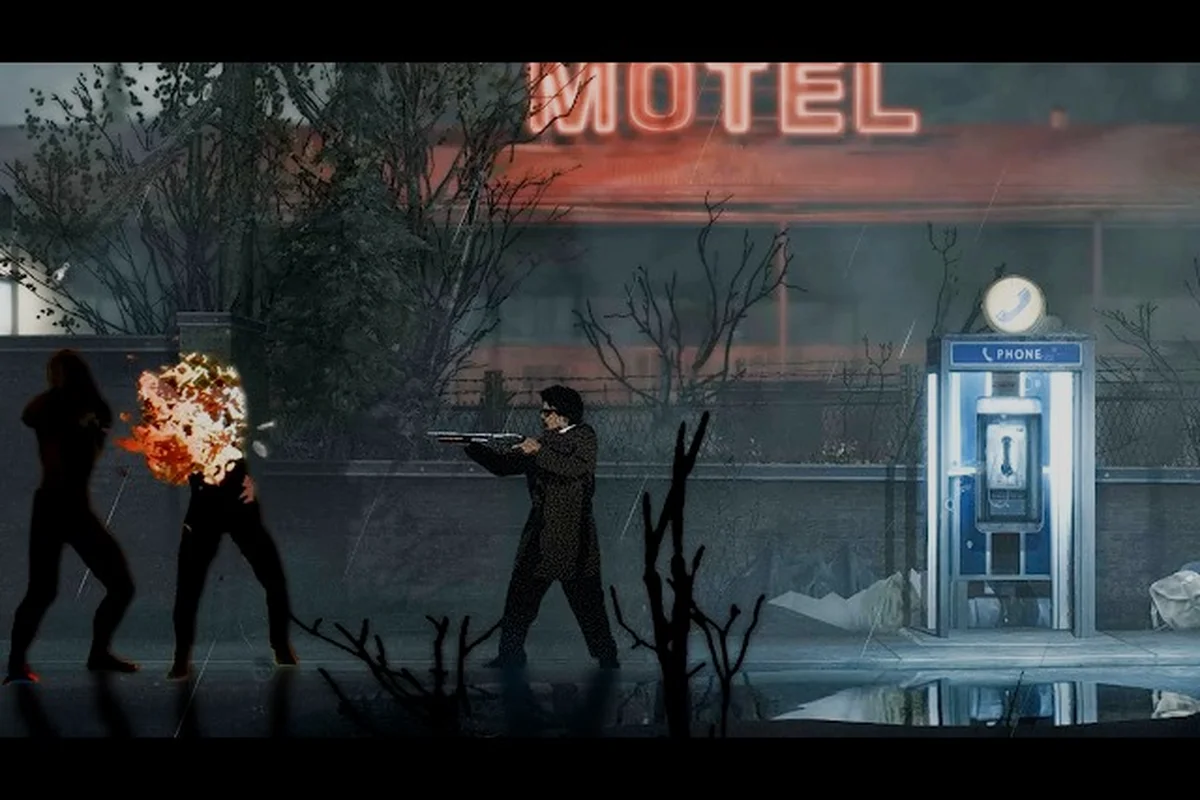
Surviving Silver Pines means reading the fog before it reads you. This silver pines enemy guide breaks down every hostile presence in the town, from shambling street threats to the stalkers that punish careless movement, so you can route around danger instead of burning through limited ammo.
Understanding the Silver Pines Enemy Roster
The hostile population in Silver Pines is not a single uniform threat. Community testing consistently shows that enemy behavior splits into distinct archetypes, each with its own detection range, movement pattern, and response to noise. Learning the full silver pines enemy list early changes how you approach every street, alley, and interior space.
The most important distinction is between ambient enemies and triggered enemies. Ambient enemies patrol fixed loops and only react when you enter their sensory radius. Triggered enemies, by contrast, activate based on story progress, item pickup, or specific audio cues. Because the game never displays an on-screen threat meter, you must rely on environmental tells and audio layering to judge distance and alert state.
| Enemy Category | Detection Type | Primary Threat | Recommended Response |
|---|---|---|---|
| Street Wanderers | Line of sight | Medium | Break sightlines, use cover |
| Stalkers | Audio + proximity | High | Crouch-walk, avoid sprinting |
| Lurkers | Static ambush | Very High | Pre-check corners with camera |
| Boss-class | Scripted encounter | Extreme | Prepare resources, learn phases |
According to community data, the Lurker archetype causes the most early deaths because it punishes the habit of sprinting through doorways. Players report that slowing down before every threshold reduces ambush deaths by a significant margin, which is why the silver pines monster guide approach prioritizes patience over speed.
Street Enemy Behavior and Patrol Patterns
Street enemies in Silver Pines follow predictable but layered patrol routes. The silver pines street enemy guide approach starts with observation: stand still for ten seconds at a corner and watch how many figures cross your field of view. Most street threats move in short loops between two or three anchor points, which means you can time a crossing window once you identify the loop length.
Reading Patrol Loops
A standard street patrol loop lasts between 12 and 18 seconds, based on player timing reports. The enemy pauses at each anchor point for roughly two to three seconds, scanning left and right before continuing. Because the pause creates a predictable gap, you can slip through when the enemy turns away, provided you stay below the noise threshold.
| Patrol Phase | Duration | Player Action Window |
|---|---|---|
| Movement between anchors | 4-6 seconds | Low — enemy is scanning |
| Anchor pause | 2-3 seconds | Moderate — brief opening |
| Turn animation | 1-2 seconds | High — best crossing moment |
| Return movement | 4-6 seconds | Low — wait for next cycle |
The turn animation is the safest crossing window because the enemy's detection cone narrows while it rotates. Players who master this timing report clearing entire street sections without firing a single shot, which matters because ammunition in Silver Pines is deliberately scarce.
Audio Cues and Detection States
Silver Pines communicates threat states through layered audio rather than visual indicators. A soft ambient drone means no enemy is actively hunting you. A rising string section signals that something has noticed your presence but has not confirmed your location. A sharp percussive hit means you are being pursued.
The stealth guide covers the full audio cue hierarchy in detail, but the core rule is simple: when the music shifts, stop moving and reassess. Sprinting during a rising string section almost always converts a suspicion state into a full chase, because footstep noise compounds with the existing alert.
Enemy Types and Weaknesses
The silver pines enemy types break down into four core categories, each with distinct vulnerabilities. Knowing what you are facing before you commit to a fight prevents wasted resources and unnecessary risk. For example, Stalkers in the North Forest patrol set routes that reset every three in-game nights, so memorizing their loop lets you slip past without expending Repellent or Silver Bullets, while Hollowed variants punish blind aggression by regenerating health whenever they land a grab.
The Street Wanderer
Street Wanderers are the most common hostile presence, appearing on nearly every outdoor route after the first hour. They move slowly, react to line of sight, and deal moderate damage if they close distance. Their weakness is verticality — they cannot climb or navigate ladders, so elevated positions neutralize them completely.
The Stalker
Stalkers are the reason the silver pines how to avoid enemies question dominates player discussions. These enemies do not patrol fixed routes. Instead, they shadow the player from a distance, staying just outside clear visual range until the player makes a mistake. Their weakness is stillness — a stationary player is nearly invisible to them, while a sprinting player is a beacon.
The Lurker
Lurkers hide in fixed positions, often inside closets, under stairwells, or behind doorframes. They do not move until triggered, which makes them the hardest enemy to spot in advance. Their weakness is camera discipline — if you pan the camera around every corner before entering, you can spot the telltale visual distortion that marks a Lurker's hiding spot.
The Hulking Variant
The Hulking Variant appears only in specific story sections and acts as a mini-boss. It has high health, deals heavy damage, and cannot be outrun in a straight line. Its weakness is environmental hazards — explosive barrels, collapsing structures, and electrical panels all deal massive damage to it.
| Enemy Type | Weakness | Ammo Cost to Kill | Avoidable? |
|---|---|---|---|
| Street Wanderer | Elevated positions | 3-4 shots | Yes, with route planning |
| Stalker | Standing still | 5-6 shots | Yes, with patience |
| Lurker | Camera pre-check | 4-5 shots | Yes, if spotted early |
| Hulking Variant | Environmental hazards | 12+ shots | No, scripted encounter |
The silver pines all enemies data above comes from aggregated player reports, and exact health values may shift with patches. What remains consistent is the resource math: avoiding a fight costs zero ammunition, while even a basic Street Wanderer encounter costs three to four rounds.
Resource Management and Avoidance Strategy
The silver pines how to avoid enemies question is fundamentally a resource management question. Every bullet spent on a Street Wanderer is a bullet unavailable for a scripted Hulking Variant fight later. Because ammunition spawns are finite and often hidden, the optimal strategy is to treat combat as a failure state rather than a default response.
The Noise Budget System
Community players have developed a noise budget approach to navigation. Every action in Silver Pines generates a noise value: crouch-walking is nearly silent, walking is moderate, sprinting is loud, and combat is deafening. The noise budget concept means you can afford exactly one loud action per street section before enemies converge on your position.
| Action | Noise Value | Enemy Response |
|---|---|---|
| Crouch-walk | 1 | No response beyond 5 meters |
| Walk | 3 | Suspicion within 15 meters |
| Sprint | 7 | Full alert within 25 meters |
| Gunshot | 10 | All enemies in section converge |
The noise budget explains why experienced players clear early sections without firing. A single gunshot on Main Street pulls every Street Wanderer and Stalker in a two-block radius toward your position, which turns a one-enemy problem into a five-enemy problem instantly.
Route Planning with the Town Map
Effective avoidance starts before you leave a safe room. The town map guide breaks down every district and its enemy density, which lets you plan routes that minimize exposure. The Ferry Landing area, for example, has fewer enemies but longer sightlines, while the Main Street corridor is dense but offers more cover.
When planning a route, prioritize narrow passages over open plazas. Narrow passages limit the number of enemies that can see you at once, while open plazas expose you to multiple sightlines simultaneously. The silver pines enemy guide approach always favors the route with fewer simultaneous detection angles, even if it takes longer.
Combat Fallback and Weapon Selection
Sometimes avoidance fails, and you must fight. When that happens, the weapon list provides the full breakdown of available tools, but the core principle is simple: use the quietest effective option first. This hierarchy matters because noise is not binary in Silver Pines — every firearm discharge pushes the local threat meter upward, and the resulting Street Wanderer convergence can turn a single mistake into a three-front engagement within seconds. A suppressed pistol may still alert enemies within roughly fifteen meters, while the hunting rifle's report carries across an entire district block, so "quietest first" is less about stealth purity and more about controlling how many spawn groups you wake at once.
Melee weapons generate no gunshot noise and can dispatch a single Street Wanderer in two to three hits. The tradeoff is range and the risk of taking damage during the exchange. Firearms solve the range problem but trigger the noise cascade described above. The silver pines monster guide recommendation is to keep one melee weapon upgraded for silent takedowns and reserve firearms for Stalkers and scripted encounters.
The Melee-First Doctrine
The melee-first doctrine has become the standard approach among players who complete the game with ammunition to spare. The logic is straightforward: if you can reach an enemy without being detected, a melee takedown costs nothing but time. If you open fire, you spend ammunition and alert every nearby enemy.
| Combat Option | Noise Cost | Ammo Cost | Risk Level |
|---|---|---|---|
| Silent melee takedown | 0 | 0 | Low, if undetected |
| Loud melee exchange | 3 | 0 | Moderate |
| Pistol engagement | 7 | 3-4 rounds | High |
| Shotgun engagement | 10 | 2-3 shells | Extreme |
The risk column matters because damage in Silver Pines is punishing. A single Lurker hit can remove half your health, which means every combat exchange carries the potential for a death spiral. The melee-first doctrine minimizes that risk by eliminating enemies before they can react.
Advanced Avoidance Techniques
Beyond the basics, several advanced techniques separate consistent survivors from players who scrape through on luck. These methods require practice but dramatically reduce enemy contact across a full playthrough. One of the most effective is the corner-cut slide: hugging the outer edge of a building at a 45-degree angle while sprinting lets you break line of sight from Stalkers and Hunters without losing momentum, since their aggro radius shrinks by roughly half when the player is within two meters of a wall. Another high-value trick is baiting Screamers into their own audio-lure cycle — toss a bottle toward a Shambler cluster, then move perpendicular while the noise pulls both enemy types into the same corridor, causing them to block each other's pathing for six to eight seconds. On Fog Shift nights, when visibility drops to under ten meters, veterans toggle the flashlight off for two-second bursts rather than leaving it on, because sustained light triples the detection range of Lurkers hiding in doorways. These are not reaction-speed plays; they are positioning and prediction plays that turn enemy AI quirks into reliable escape windows.
The Distraction Throw
Every throwable item in Silver Pines doubles as a distraction device. Bottles, bricks, and even spent casings can be thrown to create noise at a distant point, pulling enemies away from your intended path. The technique works because enemies prioritize the most recent loud noise, which means a well-placed throw can clear an entire street section.
The Doorway Reset
The doorway reset exploits a quirk in enemy pathing: most enemies will not follow you through a closed door. If a Stalker is pursuing you, entering a building and closing the door resets its alert state, provided you move away from the entrance quickly. This technique is especially useful in the residential district, where doors are frequent.
The Light Discipline Rule
Enemies in Silver Pines are more likely to detect you in well-lit areas. The light discipline rule means staying in shadow whenever possible, even if it means taking a longer route. Streetlights create pools of visibility that function as detection zones, and crossing them requires timing or a distraction.
The boss guide applies these same principles to scripted encounters, where avoidance gives way to preparation and pattern recognition. The skills you build avoiding street enemies translate directly into boss fights, because both reward patience and punish greed.
Frequently Asked Questions
What is the hardest enemy to avoid in Silver Pines?
The Stalker is the hardest enemy to avoid because it does not follow a fixed patrol route. It shadows the player from outside visual range and closes in when you sprint or fire a weapon. Standing still for several seconds causes it to lose interest, but most players panic and run.
How many enemy types are in the silver pines enemy list?
The silver pines enemy list contains four core types: Street Wanderers, Stalkers, Lurkers, and the Hulking Variant. Each type has distinct behavior, detection methods, and weaknesses. Boss-class enemies appear in scripted encounters and are covered separately in the boss guide.
Can I complete Silver Pines without killing any street enemies?
Yes, according to community reports, most street enemies can be avoided entirely with careful route planning and patience. Only scripted encounters and boss fights require combat. The silver pines how to avoid enemies strategy centers on noise discipline and sightline management rather than fighting.
What is the best weapon for silent enemy removal?
The upgraded melee weapon is the best option for silent removal because it generates zero noise. A fully upgraded melee weapon can dispatch a Street Wanderer in two hits and a Lurker in three, provided you approach undetected. Firearms should be reserved for emergencies and scripted fights.
Do enemies respawn after I clear an area?
Based on community testing, standard enemies do not respawn within the same play session, but some areas repopulate after major story events. The Lurker positions are fixed and do not respawn once cleared. This means thorough clearing early can make later backtracking safer, though it costs time and resources.