
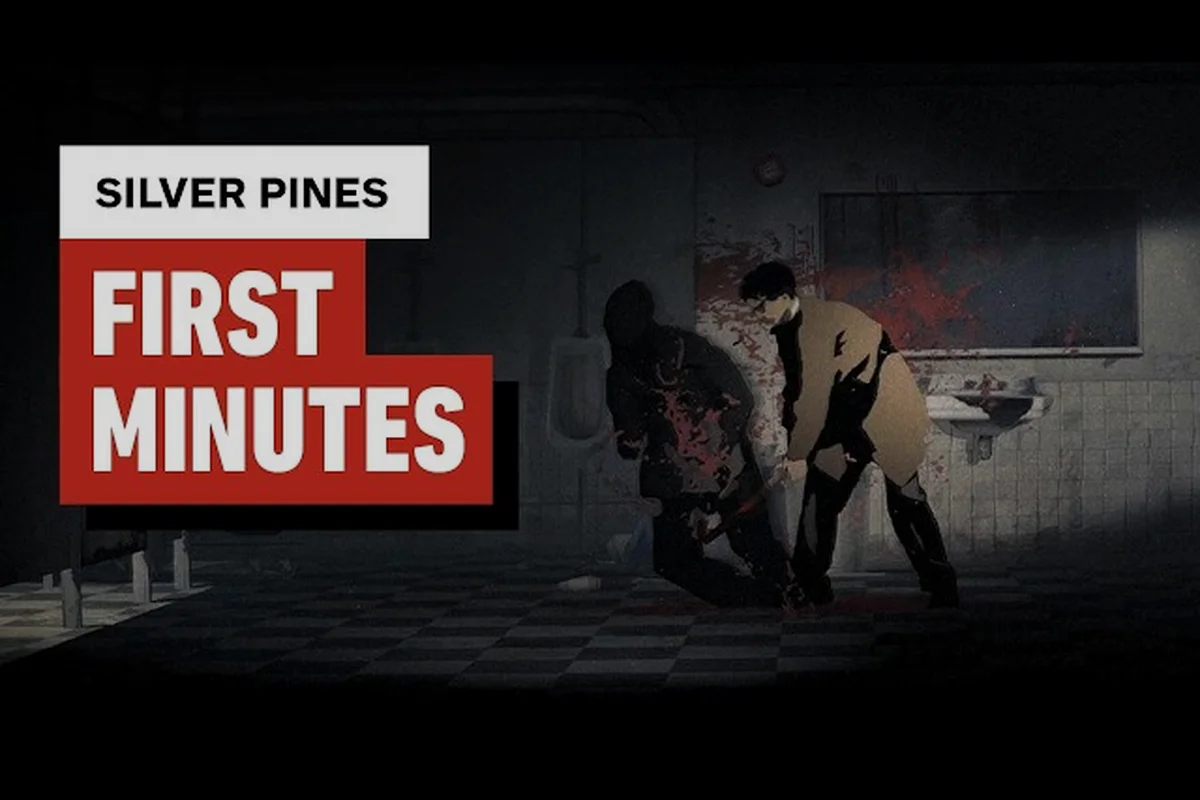
Silver Pines wears its influences proudly, and for fans of surreal small-town horror, the silver pines twin peaks references are impossible to miss once you start looking. The game layers Lynchian weirdness, Alan Wake-style manuscript dread, and its own original mythology into nearly every street corner, diner booth, and late-night radio broadcast. This guide maps every major homage, hidden lore location, and dialogue clue so you can appreciate the full scope of what developer Far Water Studio has built beneath the fog.
The Twin Peaks DNA: Structural and Thematic Homages
The most obvious silver pines twin peaks references are structural rather than cosmetic. Silver Pines does not simply copy the look of David Lynch's fictional town; it rebuilds the narrative machinery that made Twin Peaks feel so unsettling. The game opens with an outsider arriving in a small logging town after a personal tragedy, which mirrors Agent Cooper's arrival in Twin Peaks almost beat for beat. You are not a detective in the traditional sense, but the game assigns you a case file that gradually fills with photographs, witness statements, and contradictory testimony, functioning as a diegetic quest log that echoes Cooper's tape recorder monologues.
The town itself is divided into three overlapping social strata that the game calls the Town Proper, the Mill District, and the Old Growth. Each zone has its own diner, its own radio station, and its own set of secrets that only unlock after certain dialogue flags are triggered. This tripartite structure is a direct nod to Twin Peaks' division between the town, the mill, and the woods, and it means that no single playthrough will surface every silver pines easter egg unless you deliberately revisit locations after major story beats.
| Twin Peaks Element | Silver Pines Equivalent | Where to Find It |
|---|---|---|
| The Red Room | The Static Lounge | Behind the curtain in the Old Movie House |
| The Log Lady | Maeve the Archivist | Cabin on the north edge of Old Growth |
| The Double R Diner | The Pines Perk | Town Proper, open 24 hours |
| The Black Lodge | The Hollow Frequency | Accessed via the radio tower after midnight |
| The Giant's clues | Photo Hints | Scattered across all three zones |
The Static Lounge deserves special attention because it is the most elaborate silver pines twin peaks inspiration guide moment in the entire game. To access it, you need to find the Red Curtain Key inside the projection booth of the Old Movie House, then interact with the stage curtain during the fog event that occurs every third night. Inside, the floor pattern inverts, dialogue plays in reverse, and a character who resembles a distorted version of the town's mayor speaks in cryptic non-sequiturs. The room is not required for the main story, but it contains three hidden lore locations that fill in major gaps about the town's founding.
Alan Wake Echoes: Manuscripts, Light, and the Taken
While Twin Peaks provides the structural skeleton, the silver pines alan wake easter eggs supply much of the moment-to-moment horror language. The most direct homage is the manuscript page system, which functions almost identically to Alan Wake's collectible pages. Scattered throughout Silver Pines are typed pages that describe events before they happen, often in the past tense, as if someone is writing your story from the future. These pages are not marked on the map, and they only appear after you have triggered the associated event, which means backtracking is essential if you want the full silver pines secret lore.
The pages are written by a character named The Chronicler, who is never seen but whose typewriter can be heard clacking in certain locked rooms. The prose style is deliberately close to Alan Wake's manuscript voice, with lines like "the fog did not roll in so much as it arrived with purpose." Community data suggests there are 27 manuscript pages in the base game, with an additional 9 pages added in the December 2026 update. Each page is stored in your case file under a separate tab, and reading them in order reveals a secondary narrative that recontextualizes the main plot.
| Manuscript Page Type | Trigger Condition | Lore Reward |
|---|---|---|
| Event Pages | Trigger a story beat, then return to the area | Foreshadows the next chapter |
| Character Pages | Exhaust a character's dialogue tree | Reveals hidden backstory |
| Location Pages | Photograph a specific landmark | Unlocks map annotations |
| Nightmare Pages | Survive a fog event without using a weapon | Explains the town's curse |
The light mechanic is another clear Alan Wake reference, though Silver Pines twists it in an interesting direction. Instead of using light to burn away enemies, you use lanterns and vehicle headlights to reveal things that are invisible in the dark. This connects directly to the photo hint guide, which explains how the camera can expose hidden text, ghostly figures, and alternate room layouts. The Alan Wake influence is strongest in the Old Growth zone, where the forest itself seems to rearrange when you are not looking, and the only reliable way to navigate is to follow the lamppost trail that the game never explicitly marks.
Hidden Lore Locations: Where the Secrets Live
Finding every silver pines hidden lore locations entry requires a methodical approach, because the game deliberately hides its deepest secrets behind environmental puzzles rather than quest markers. The most important locations are tied to the radio tower, the abandoned sawmill, and the sub-basement of the library, but each one has a specific access condition that is easy to miss if you are rushing through the main story.
The radio tower is the single densest lore location in the game. During the day, it is just a landmark you can photograph for your case file. But if you visit after midnight in-game time during a fog event, the tower begins broadcasting a numbers station that repeats a sequence of coordinates. Writing these down and plotting them on the map reveals the locations of three buried caches, each containing a manuscript page and a tape recording that fills in the backstory of the Hollow Frequency. The tower also has a hidden ladder that only appears when you shine a lantern at the base, leading to a small room with a shortwave radio that plays a distorted version of the town's theme song.
| Lore Location | Access Condition | Key Reward |
|---|---|---|
| Radio Tower Bunker | Visit after midnight during fog | 3 manuscript pages, 1 tape |
| Sawmill Basement | Find the Rusty Winch Handle in the Mill District | The Chronicler's First Page |
| Library Sub-Basement | Solve the book spine puzzle | Town founding documents |
| Old Movie House Projection Booth | Use the Balcony Key from the diner | Red Curtain Key |
| The Hollow Frequency | Tune the radio to 107.3 FM in the Static Lounge | Secret ending clue |
The sawmill basement is particularly important because it contains the first manuscript page in the game's internal chronology, even though most players will find it late in their playthrough. The page describes the town's founding in 1954, when a logging accident uncovered something beneath the Old Growth that the founders chose to bury rather than report. This single page reframes every other piece of silver pines secret lore as a cover-up rather than a supernatural event, which is a very Twin Peaks move.
The library sub-basement requires solving a book spine puzzle that is never explicitly tutorialized. The books on the shelf are arranged by color, but three of them are out of place, and their titles spell out a date when read in the correct order. Entering that date into the card catalog terminal opens a hidden door behind the reference desk. Inside, you find the town's original founding charter, which lists the names of the first families and reveals that several current NPCs are direct descendants of the people who made the original pact.
Dialogue Guide: Reading Between the Lines
The silver pines dialogue guide is less about choosing the right response and more about knowing when to stop talking and start listening. Silver Pines uses a reactive dialogue system where NPCs remember what you have said and change their behavior accordingly, but the real secrets are hidden in the unprompted lines that characters speak when you linger near them without interacting. These ambient lines are easy to miss because they play at low volume and only trigger once per in-game day.
The most important character to listen to is Maeve the Archivist, who functions as the game's Log Lady analogue. She speaks almost entirely in riddles, but each riddle contains a directional clue that points toward a hidden location. For example, her line about "the place where the water runs backward" refers to the inverted waterfall in the Old Growth, which only appears during a fog event and hides a manuscript page behind it. Keeping a notebook or using the in-game case file notes to record her lines is essential, because she never repeats herself.
| Character | Role | Key Dialogue Trigger |
|---|---|---|
| Maeve the Archivist | Log Lady analogue | Linger near her cabin without interacting |
| Sheriff Dane | Town authority | Ask about the 1954 incident after finding the charter |
| The Chronicler | Unseen narrator | Typewriter sounds in locked rooms |
| Mayor Hollow | Distorted in Static Lounge | Speak to him in the lounge, then again in Town Proper |
| The Night Clerk | Diner employee | Visit the diner between 3:00 and 4:00 AM |
Sheriff Dane is another critical dialogue source, but only after you have found the founding charter in the library sub-basement. Before that point, he deflects every question about the town's history with a canned response. Afterward, he opens up about the 1954 incident and reveals that his grandfather was one of the original founders. This conversation unlocks a new case file entry and changes his behavior during the final chapter, where he will assist you instead of obstructing you.
The Night Clerk at the Pines Perk diner is the most overlooked dialogue source in the game. She only appears between 3:00 and 4:00 AM, and she speaks in a flat, affectless tone that contrasts sharply with the daytime clerk's cheerful patter. Her dialogue is a series of non-sequiturs that reference events from the manuscript pages, confirming that she has read them or perhaps written them. Speaking to her three times in a row unlocks a hidden dialogue tree that reveals the location of the Hollow Frequency without needing to visit the radio tower.
The Hollow Frequency and the Secret Ending
The Hollow Frequency is the game's most elaborate silver pines easter egg, and it is the key to understanding the full scope of the silver pines secret lore. It is not a physical location so much as a state of being that the game enters when you tune the radio in the Static Lounge to 107.3 FM while holding the Red Curtain Key. The screen inverts, the audio drops to a low hum, and the Static Lounge transforms into a negative space version of itself where the furniture is arranged in impossible configurations.
Inside the Hollow Frequency, you can walk through walls that were solid before, revealing three hidden rooms that do not exist in the normal version of the building. Each room contains a tape recording that plays a conversation between the town's founders, recorded in 1954 as they debated what to do with the thing they found beneath the Old Growth. The recordings are heavily distorted, but the subtitles are clear, and they reveal that the founders made a pact with something they called The Listener, trading the town's silence for its survival.
| Hollow Frequency Room | Contents | Lore Implication |
|---|---|---|
| The Founder's Study | Tape 1: The Discovery | The 1954 accident was not an accident |
| The Nursery | Tape 2: The Pact | The founders agreed to feed The Listener |
| The Projection Room | Tape 3: The Cover-Up | The town's memory was deliberately erased |
Collecting all three tapes and then returning to the radio tower during a fog event triggers the secret ending, which is a short sequence that recontextualizes the entire game. Without spoiling the details, the secret ending suggests that the player character has been in the Hollow Frequency the entire time, and that the "real" Silver Pines is somewhere else entirely. This is the most overt silver pines twin peaks reference in the game, because it mirrors the final episodes of Twin Peaks where the boundary between the real world and the Lodge collapses.
The Hollow Frequency also connects to the forest area guide, which maps the Old Growth zone where the original 1954 discovery took place. The forest is the only area where the Hollow Frequency bleeds through into the normal world, causing trees to shift position and paths to loop back on themselves. Navigating it requires either following the lamppost trail or using the photo hints to reveal the true path.
Frequently Asked Questions
How many silver pines twin peaks references are there in total?
Community data suggests there are over 40 distinct references spread across the base game and the December 2026 update. The count includes structural homages, visual callbacks, dialogue echoes, and hidden lore locations, though some are subtle enough that players debate whether they qualify as intentional references or coincidental similarities.
Where is the Red Curtain Key in Silver Pines?
The Red Curtain Key is inside the projection booth of the Old Movie House, which you can access by finding the Balcony Key in the Pines Perk diner. The Balcony Key is hidden behind the counter, and it only appears after you have spoken to the Night Clerk at least once.
Do the Alan Wake easter eggs require playing Alan Wake first?
No, the silver pines alan wake easter eggs are designed to work on their own terms. The manuscript pages and light mechanics function as original systems within Silver Pines, so you do not need prior knowledge of Alan Wake to understand them, though familiarity with Remedy's game makes the homages more rewarding.
What is the best way to find all hidden lore locations?
The most reliable method is to photograph every landmark with the camera, because photo hints reveal hidden text and alternate room layouts that point toward lore locations. You should also revisit areas after major story beats, since many manuscript pages only spawn after their associated events have triggered.
Can I access the Hollow Frequency without finding all the tapes?
Yes, the Hollow Frequency unlocks as soon as you have the Red Curtain Key and tune the Static Lounge radio to 107.3 FM. The three tapes are inside the Hollow Frequency itself, so you do not need to collect them beforehand, though you do need all three to trigger the secret ending.