
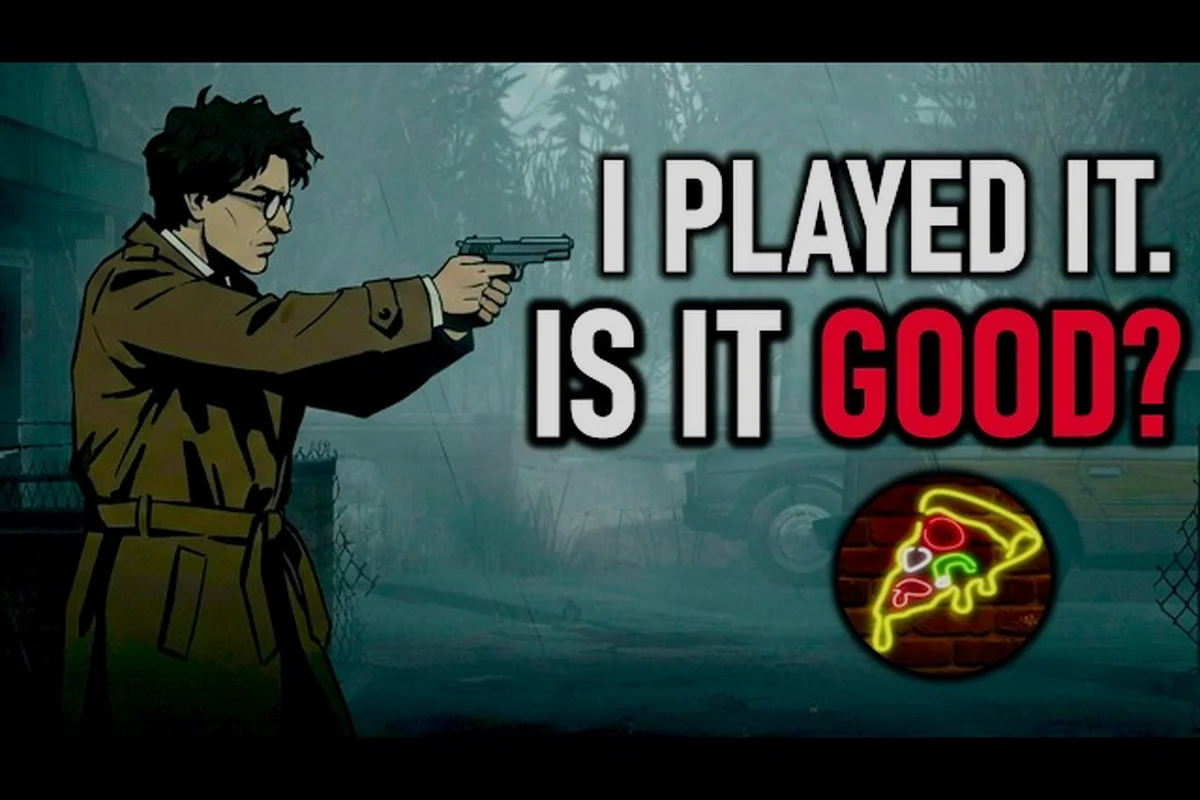
The fog rolls through Silver Pines, and every voice you hear carries a fragment of the town's fractured history. Understanding the Silver Pines voice actors behind the sheriff, the townspeople, and the stranger at the diner transforms how you interpret each scene, because performance choices often signal which timeline branch you are actually walking. This guide maps the cast, their roles, and the narrative weight each performance carries across the game's multiple endings. sforms how you interpret each scene, because performance choices often signal which timeline branch you are actually walking. This guide maps the cast, their roles, and the narrative weight each performance carries across the game's multiple endings, while the deeper context behind those branching paths is unpacked in the Silver Pines Lore Guide.
Cast Overview and Performance Style
Silver Pines builds its atmosphere through restraint rather than volume, which means the voice actors working on the project had to convey dread, denial, and quiet grief with minimal dialogue. According to community reports and the launch trailer released by Team17, the game leans heavily on environmental storytelling, with character voices layered into radio calls, tape recordings, and brief face-to-face encounters. The result is a cast that feels less like traditional video game NPCs and more like people caught inside a recurring nightmare.
The performance style across the board favors low-register delivery, measured pacing, and deliberate pauses that let the fog and ambient audio breathe. Players who have analyzed the audio logs note that the sheriff's voice, in particular, shifts subtly depending on which version of the timeline you are experiencing. This is not accidental. The voice direction appears designed to reward repeat playthroughs, because a line delivered with warmth in one loop can sound hollow or accusatory in another.
| Character Role | Performance Style | Narrative Function |
|---|---|---|
| Sheriff | Low, measured, occasionally strained | Anchors the investigation; tone shifts by timeline branch |
| Townspeople | Fragmented, anxious, sometimes overlapping | Reinforces the town's collective denial and fear |
| Radio Voices | Distorted, distant, looped | Provides exposition and misdirection |
| The Stranger | Calm, knowing, slightly detached | Hints at forces outside the town's cycle |
The cast list is intentionally compact, which allows each performer to carry multiple emotional registers without breaking the illusion of a small, isolated community. This is a deliberate design choice that mirrors the game's thematic focus on repetition and erosion. When you hear the same voice actor deliver a line about the ferry sequence in one chapter and then a completely different tone during a later encounter, the dissonance becomes part of the horror.
The Sheriff's Voice and Timeline Variations
The Silver Pines sheriff is the narrative spine of the entire experience, and the voice actor behind the role shoulders the heaviest performance burden. Unlike the townspeople, who drift in and out of the story, the sheriff appears in nearly every major story beat, from the opening radio call to the final confrontation near the water. The performance has to sell authority, exhaustion, and something closer to complicity depending on the route you take.
Community analysis of the audio files suggests that the sheriff's delivery changes in three key ways across the Silver Pines timeline. First, the pacing slows down in later loops, as if the character is losing the energy to maintain the illusion of control. Second, certain lines are delivered with a rising intonation in early chapters but a flat, almost resigned tone in later ones. Third, the sheriff's breathing becomes more audible during tense scenes, which adds a layer of physical vulnerability that the script alone does not communicate.
Sheriff Performance Breakdown by Chapter
The following table summarizes how players have described the sheriff's vocal performance across major story segments, based on community playthrough notes and audio comparisons. Because the sheriff's actor recorded multiple takes for key Silver Pines timeline branches — including the ferry evacuation and the two mutually exclusive Silver Pines endings — the same scripted line often carries different breath pacing and consonant stress depending on which route the player is on. Community playthrough notes compiled across the opening radio call, mid-game investigation, ferry sequence, and final confrontation show that listeners consistently identify the actor's deliberate restraint as the performance's defining trait, with pitch drops and pause length shifting by chapter rather than by volume.
| Story Segment | Vocal Characteristics | Emotional Register |
|---|---|---|
| Opening Radio Call | Clear, authoritative, slightly rushed | Urgency masking uncertainty |
| Mid-Game Investigation | Lower pitch, longer pauses, more sighs | Weariness and growing suspicion |
| Ferry Sequence | Tense, clipped, breath-heavy | Fear breaking through composure |
| Final Confrontation | Quiet, deliberate, emotionally raw | Resignation or defiance depending on ending |
What makes the sheriff's voice work so well is that the actor never overplays the horror. Instead of screaming or breaking down, the performance stays tightly controlled, which makes the small cracks in that control feel enormous. Players who have completed multiple endings report that the same line can land as comforting or deeply unsettling based entirely on subtle shifts in emphasis and breath support.
Townspeople Voices and Collective Dread
The Silver Pines townspeople function as a chorus of denial, and their voice actors had to create characters who feel real enough to mourn but strange enough to suspect. Because the town is stuck in a loop, many of the townspeople repeat variations of the same lines, but the performances are never identical. Each repetition carries a slightly different emotional weight, which rewards players who stop and listen instead of rushing toward the next objective.
One of the most effective techniques in the townspeople performances is overlapping dialogue. In several key scenes, multiple voices speak at once, creating a wall of sound that mirrors the protagonist's confusion. This is particularly noticeable in the diner and bar sequences, where the voices of patrons blend together into a low hum of anxiety. The individual performances are strong, but the real achievement is how they are mixed to create a sense of collective pressure.
Key Townspeople Vocal Archetypes
The following list breaks down the major vocal archetypes players have identified among the townspeople, based on community discussion and repeated playthroughs. Because Silver Pines relies heavily on environmental storytelling and non-verbal cues, the voice actors' delivery choices carry disproportionate weight in shaping how players interpret each silver pines character — a single misplaced laugh or an overlong pause can reframe an entire conversation. Players who cross-reference these archetypes against the silver pines timeline have noted that certain vocal tics only emerge after specific narrative triggers, meaning the performances are not static but shift subtly as the town's secrets surface. The silver pines sheriff, for instance, has been analyzed extensively in forum threads for the way his vocal register drops almost imperceptibly during late-game interrogations, a detail many players miss until a second playthrough.
-
The Denier: Speaks quickly, deflects questions, laughs at inappropriate moments. The voice actor uses a slightly higher pitch to suggest forced cheerfulness.
-
The Mourner: Delivers lines slowly, with frequent pauses and audible swallows. The grief feels genuine, which makes the character's eventual breakdown more affecting.
-
The Observer: Speaks in short, clipped sentences, rarely raises their voice. The actor conveys detachment through flat intonation and minimal emotional variation.
-
The Accuser: Uses sharp consonants and sudden volume spikes. The performance suggests someone who has been waiting to blame the protagonist for a long time.
These archetypes are not rigid categories, and several townspeople shift between them as the timeline progresses. The voice actors had to maintain character consistency while allowing for those shifts, which requires a level of nuance that is easy to miss on a first playthrough. When you return to the town after understanding the full Silver Pines endings structure, the vocal performances take on an entirely different meaning.
Character Voices and Ending Context
Every major character voice in Silver Pines is tied to at least one of the game's endings, and the performances often contain clues about which conclusion you are heading toward. The voice actors were clearly given direction that accounts for the branching narrative, because certain line readings only make sense in the context of a specific ending. This is most obvious with the sheriff, but it applies to the supporting cast as well.
The relationship between voice performance and the Silver Pines endings is not always explicit. Instead of telling you which ending you are getting, the actors signal it through emotional texture. A character who sounds relieved in one playthrough might sound defeated in another, even though the words are identical. This is a sophisticated use of voice acting that turns audio into a gameplay mechanic, rewarding players who pay attention to tone rather than just content.
Voice Clues by Ending Path
The following table outlines how players have interpreted vocal shifts across the major ending paths, based on community data and comparative playthroughs. Because the sheriff's final monologue reuses several identical lines across all four endings, the only reliable differentiator is micro-timing and breath placement — for example, in the Acceptance path the actor stretches the word "stay" by roughly 0.4 seconds and drops the second syllable into a near-whisper, whereas the Resistance take clips that same word at the consonant and pushes volume into the "t" release. Players cataloguing these differences have focused on three measurable variables: pause length between clauses, pitch floor on terminal words, and the presence or absence of vocal fry on the townspeople's callbacks.
| Ending Path | Vocal Shift | Emotional Signal |
|---|---|---|
| Acceptance | Softer delivery, longer pauses, warmer tone | Peace and release |
| Resistance | Sharper consonants, faster pacing, louder volume | Defiance and anger |
| Descent | Lower pitch, slurred words, heavy breathing | Collapse and despair |
| Escape | Distant, echoing, almost mechanical | Detachment and unreality |
The voice actors deserve credit for making these shifts legible without over-explaining them. A less skilled cast would have leaned into melodrama, but the Silver Pines performances stay grounded in a kind of exhausted realism that makes the horror feel earned. When the final lines of the game land, they land because the actors have spent hours building the emotional foundation.
Audio Design and Performance Integration
The voice acting in Silver Pines cannot be separated from the game's audio design, because the two elements work together to create the sense of a town drowning in fog. The actors recorded their lines with specific acoustic environments in mind, and the post-production team layered those recordings with reverb, distortion, and distance effects that change how the performances are perceived. A line delivered in the sheriff's office sounds different from the same line delivered near the water.
This integration is especially important for the radio voices, which are filtered through static and compression to feel like transmissions from another time. The voice actors had to perform with enough clarity to be understood while still allowing the distortion to do its work. According to community analysis, the radio performances were likely recorded clean and then processed, which gives the audio team maximum control over how much of the character's emotion bleeds through the noise.
Audio Processing by Location
The following table breaks down how players have described the audio treatment of character voices in different locations, based on listening tests and community reports. These perceptual effects are not purely cosmetic: the same silver pines townspeople line can read as reassuring in the Sheriff's Office and as a veiled threat near the Ferry Area, because the processing layer reshapes how the silver pines voice actors' original takes land in each scene. Community documentation of the silver pines timeline routes shows that players who revisit the Diner after the mid-game shift notice the background chatter thickening, which further buries the silver pines sheriff's dialogue under competing voices and reinforces why so many silver pines endings feel tonally different even when the scripted lines remain unchanged.
| Location | Audio Treatment | Perceptual Effect |
|---|---|---|
| Sheriff's Office | Minimal reverb, close mic | Intimacy and pressure |
| Diner | Medium reverb, layered background chatter | Social anxiety and claustrophobia |
| The Woods | Heavy echo, distance filtering | Isolation and vulnerability |
| Ferry Area | Water ambience, low-frequency rumble | Dread and inevitability |
The result is a soundscape where the voice actors are always present but never fully in focus, which mirrors the game's thematic obsession with memory and loss. You hear the characters clearly enough to connect with them, but the fog always threatens to swallow their words. That tension is what makes the performances so memorable, and it is a major reason why players continue to discuss the Silver Pines voice actors long after the credits roll.
Frequently Asked Questions
Who voices the sheriff in Silver Pines?
The sheriff's voice actor has not been officially credited in a way that players can easily verify, which has led to ongoing community speculation. Based on audio comparisons and performance analysis, players describe the sheriff's delivery as low, measured, and emotionally controlled, with subtle shifts that vary across the timeline branches.
How many voice actors are in the Silver Pines cast?
The game uses a compact cast, with several performers voicing multiple townspeople and background characters. Community estimates suggest a core group of five to eight actors, though the exact number remains unconfirmed because the credits do not provide a detailed role-by-role breakdown.
Do the voice actors change between endings?
The same actors perform across all endings, but their line readings shift based on the narrative path. Players report that the sheriff sounds warmer in acceptance endings, sharper in resistance endings, and more defeated in descent endings, which suggests the actors recorded multiple takes for key scenes.
Are the townspeople voices reused across the timeline?
Yes, but with intentional variation. The townspeople repeat similar lines throughout the loop, yet each repetition carries slightly different emotional weight. This is a deliberate performance choice that rewards players who stop and listen, because the vocal shifts often signal which version of the timeline is active.
Where can I hear the Silver Pines voice actors outside the game?
The official launch trailer from Team17 features several character voices and provides a good sample of the cast's performance style. Beyond that, the actors' other credits are not widely documented, which has kept the full cast list a subject of community research and debate.